Water is such a familiar part of daily life that most of us rarely stop to think about it. We fill a glass, make tea, rinse vegetables, or turn on the shower without giving the water much attention. That usually changes when something feels different. Maybe the coffee tastes slightly off, the ice cubes have an unusual odor, or white marks keep appearing around the kitchen faucet. These little annoyances can raise a bigger question: is there a practical way to improve the water we use every day?
The answer depends on what is actually in the water. Some households deal with mineral buildup, others notice an unpleasant taste, and some need to address specific contaminants. Understanding these differences makes it easier to choose the right treatment without spending money on equipment that may not solve the problem.
Why Water Quality Matters More Than You Might Think
Water affects more than thirst. It plays a role in cooking, cleaning, bathing, and maintaining household appliances. When its characteristics are unsuitable for a particular use, the effects can become noticeable throughout the home.
Hard water, for example, contains elevated levels of dissolved calcium and magnesium. These minerals can leave deposits on showerheads, reduce soap lather, and contribute to scale inside water heaters. Other concerns, including sediment, iron, and certain dissolved substances, require different approaches.
Taste and smell are useful clues, but they cannot tell the whole story. Water that looks clean may still contain substances that require testing, while an unpleasant taste does not automatically mean the supply is unsafe. A water test provides a more reliable starting point, helping homeowners understand which characteristics need attention.
Once you have that information, choosing an appropriate filtration or treatment system becomes a much more straightforward process.
Better-Tasting Water Can Change Everyday Habits
Think about how often water appears in your kitchen. It’s used for drinking, making soup, preparing rice, brewing coffee, and mixing drinks. When the taste is unpleasant, even simple routines can become less enjoyable. Some people start buying bottled water, while others stop drinking as much tap water as they would like.
A suitable filtration system can help enhance flavor by reducing certain substances responsible for unwanted tastes and odors. Activated carbon filters, for instance, can reduce chlorine taste and selected organic compounds, depending on their design and certification. The results vary, so it’s worth checking what a particular filter is designed to address before buying it.
The difference can be especially noticeable in tea and coffee. Water makes up most of the final drink, so its taste can influence the result. If the water has a strong residual odor or an unusual flavor, those characteristics may carry through into the cup.
Still, filtration isn’t a magic fix for every taste problem. Mineral content, plumbing conditions, and the water source can all influence flavor. If the taste changes suddenly, investigate the cause rather than assuming a new filter is the only answer.
Understanding Chlorine and Its Role in Drinking Water
Municipal water suppliers commonly use disinfection methods to control harmful microorganisms. Chlorine is one of the substances used for this purpose, and maintaining an appropriate disinfectant residual can help protect water as it travels through distribution pipes.
Some people notice a swimming-pool-like taste or smell in their tap water. Although this can be unpleasant, the smell alone does not establish whether chlorine levels are unsafe. The actual concentration and the condition of the water supply matter more than personal perception.
For households that want to reduce the taste or odor associated with chlorine, an appropriately certified activated carbon filter may be useful. The key is selecting a product designed to reduce chlorine and following its maintenance instructions. Different filters have different capacities, and performance can decline when cartridges are used beyond their recommended service life.
It’s also important not to remove disinfection without understanding the consequences. Water treatment decisions should account for the source, local guidance, and any identified concerns. If the water develops a sudden or unusual odor, contact the water provider or arrange suitable testing instead of relying solely on taste.
Can Better Water Support a Healthier Routine?
Clean water is essential for normal bodily functions, and drinking enough water throughout the day helps maintain hydration. For many people, convenient access to water that tastes pleasant makes it easier to keep a reusable bottle nearby and drink regularly.
Appropriate water treatment can support health when it addresses an identified water-quality concern. For example, a treatment system certified to reduce a particular contaminant may help lower exposure to that substance when installed and maintained correctly. However, not every filter reduces every contaminant, and a general-purpose cartridge should never be assumed to make unsafe water safe.
Testing is particularly important when there are concerns about lead, bacteria, nitrates, or other substances that can affect health. Private well owners should follow local recommendations for testing, while people using municipal supplies can review their utility’s water-quality report. If the findings indicate a problem, select a treatment method suited to the specific result.
It’s also worth keeping expectations realistic. Water filtration is not a substitute for medical care, and claims that a product provides broad health benefits should be treated cautiously. Reliable performance information and appropriate testing are far more useful than dramatic marketing promises.
Choosing a System That Fits Your Home
There are several ways to treat household water, and each serves a different purpose. The best choice depends on the problem, the amount of water being used, and where treatment is needed.
- Activated carbon filters: Often used to reduce certain tastes, odors, and selected compounds.
- Sediment filters: Designed to capture particles such as sand, rust, and other suspended material.
- Water softeners: Primarily used to reduce hardness minerals and help limit scale formation.
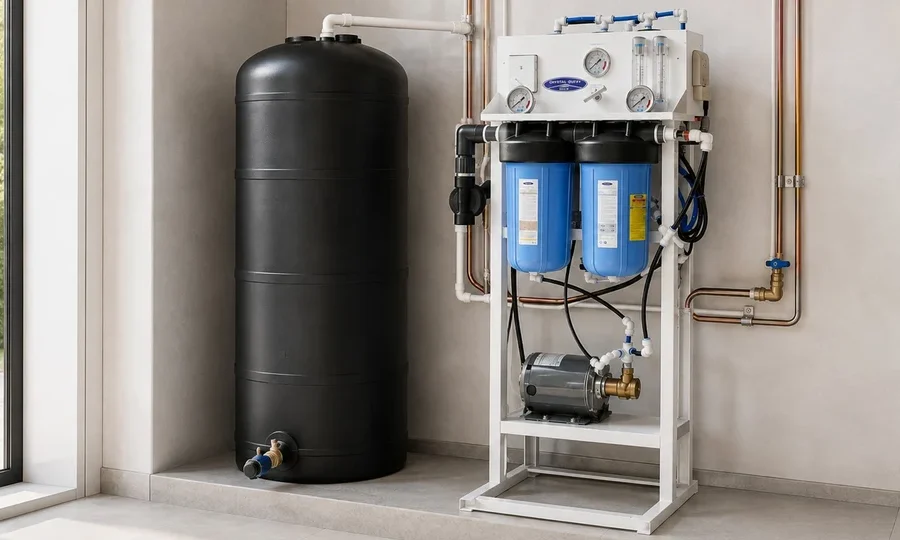
- Reverse osmosis systems: Designed to reduce many dissolved substances, depending on the model and its verified performance.
- Disinfection systems: Used when microbial treatment is needed and the equipment is appropriate for the water source.
A kitchen drinking-water filter may be enough for someone mainly concerned about taste. A household with hard water throughout the plumbing may need a softener instead. Some properties require a combination of technologies, but adding more equipment does not automatically produce better results.
Before purchasing anything, consider the installation space, water pressure, flow rate, replacement costs, and maintenance schedule. Ask the provider to explain which substances the recommended system can reduce and how that performance is verified.
Maintenance Is Just as Important as Installation
Even a good filtration system needs regular care. Cartridges become exhausted, membranes require replacement, and some treatment units need cleaning or periodic servicing. Ignoring these tasks can reduce performance and leave homeowners unsure whether their water is being treated as intended.
Keep a simple record of installation dates, filter changes, and any water tests. Follow the manufacturer’s instructions and use compatible replacement parts. If you notice a sudden change in taste, odor, color, or pressure, investigate it rather than assuming the filter has simply reached the end of its life.
Making a More Informed Choice
Better household water doesn’t necessarily require the most expensive equipment or a complicated plumbing project. Often, the sensible first step is simply finding out what is in the water and identifying the concern that matters most.
Test when appropriate, compare systems carefully, and look for clear evidence of performance. With the right approach, you can make everyday water use more pleasant, reduce certain household nuisances, and address specific water-quality concerns with greater confidence.
Ultimately, good water treatment is about practical improvements that fit your home. Start with reliable information, maintain the system you choose, and let your household’s actual needs guide the decision.